No Signal, No Problem: How Outback Gamers Are Rewriting the Rules
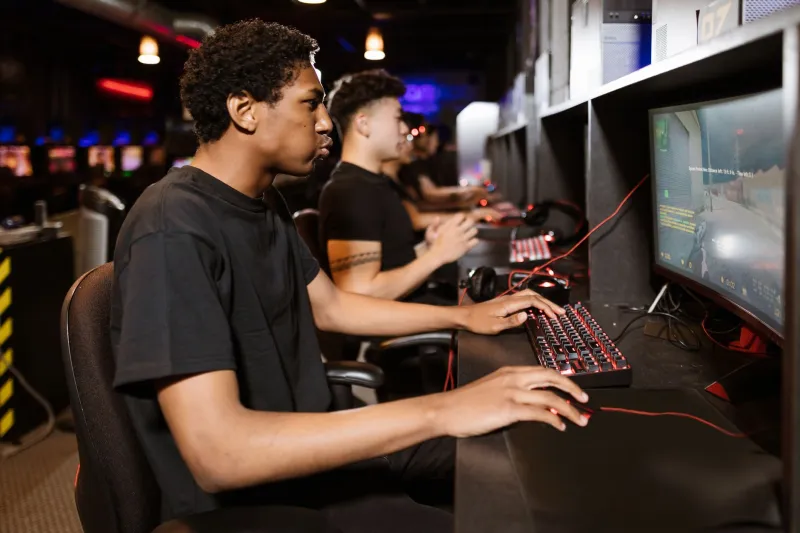
There's a moment every regional Australian gamer knows well. You're mid-match, everything's going smoothly, and then — ping spike. Connection dropped. Your teammates in Sydney or Melbourne are fine. You're the one staring at a loading screen from somewhere outside Dubbo or Broken Hill, wondering if tonight's session is already over.
For years, the conversation around rural gaming in Australia has focused almost entirely on what's missing: reliable NBN, low-latency connections, local servers. And yeah, those things matter. But zoom out a little, and a different story starts to take shape — one where the gaps in infrastructure have quietly pushed regional gamers to get creative in ways their city counterparts simply haven't needed to.
What's emerged isn't a lesser version of Australian gaming culture. It's something distinct, community-driven, and honestly a bit inspiring.
The LAN Party Never Died Out Here
While LAN parties faded into nostalgia for most metro gamers sometime around 2010, they never really went away in regional Australia. They just evolved.
In towns from Kalgoorlie to Tamworth, local gaming events have become a genuine fixture on the community calendar. RSL halls, community centres, even the occasional pub back room — these spaces get transformed into makeshift gaming venues where players lug their towers and monitors for a weekend of lag-free local multiplayer.
The appeal is obvious when you think about it. If online play is unreliable, go offline. If you can't connect to the wider world easily, connect with the people around you. Regional LAN events often carry a social energy that's hard to replicate in an online lobby — everyone's in the same room, the banter is live, and the chips and energy drinks are communal.
Some of these events have grown into proper local institutions. Towns that might not have much else going on for young people on a Saturday night suddenly have somewhere to be, something to compete in, and a reason to stick around.
Discord Became the Great Equaliser
Beyond the in-person stuff, regional gamers have leaned hard into Discord as a way to build community that doesn't depend on a flawless internet connection. Voice quality holds up even on slower connections, text channels don't require much bandwidth, and the server structure lets tight-knit groups create their own little worlds.
Scroll through some of the more active Australian gaming Discord servers and you'll find dedicated channels for regional players — sometimes organised by state, sometimes by specific towns or areas. These aren't just places to complain about ping. They're where people share offline-friendly game recommendations, organise local meetups, and generally keep each other company through the isolation that can come with living far from a major city.
For a lot of regional gamers, their Discord community is more important to their gaming life than any specific platform or title. The game changes. The group stays.
Offline-First Games Found Their Audience
Here's something the broader gaming industry probably didn't plan for: rural Australians have become quiet champions of single-player and offline-first gaming at a time when the industry kept pushing toward always-online experiences.
When your connection can't support a 64-player battle royale, you find other things to play. Deep RPGs, strategy games, city builders, narrative adventures — genres that reward patience and investment rather than reaction speed and stable ping. Games like Stardew Valley, Hades, Hollow Knight, and the entire catalogue of indie darlings that don't need a server to be brilliant.
Regional gaming communities have become genuinely influential tastemakers for this kind of game. Word spreads fast in a tight group. If someone in a country town Discord discovers a gem that runs beautifully offline, everyone hears about it within days. Indie developers, many of whom are already operating outside the mainstream, have found loyal audiences in places they might never have expected.
It's a feedback loop that benefits everyone — players find games that actually work for their circumstances, and smaller developers get passionate communities who stick around.
The Indie Scene Hits Different Out Here
Speaking of indie games — there's a particular affinity between regional Australian gamers and the indie development scene that goes beyond practicality. Both exist a little outside the mainstream. Both have had to find ways to do more with less. And both tend to value community over scale.
A number of Australian indie developers have spoken about drawing inspiration from regional and rural life — the landscapes, the isolation, the particular rhythm of country towns. Games like Untitled Goose Game (Melbourne, technically, but very much an Australian sensibility) resonate partly because they feel made by people who understand that fun doesn't require a blockbuster budget.
For rural players, supporting Australian indie games often feels personal in a way that buying the latest AAA title doesn't. These are games made by people who get it — who understand that gaming in Australia isn't one uniform experience.
What This Means for the Rest of Us
It'd be easy to frame all of this as making the best of a bad situation. And sure, nobody's pretending that unreliable internet is a feature. Better infrastructure across regional Australia would be a good thing, full stop.
But the communities that have grown up around those limitations are worth paying attention to regardless of what happens with the NBN. The LAN culture, the Discord networks, the offline game communities — these aren't going to disappear once the connection improves. They've taken root because they meet real social needs that fast internet alone doesn't address.
There's something in the regional gaming model that the broader Australian gaming community could learn from. The emphasis on local connection, on knowing the people you play with, on finding games that reward time and attention rather than just reflexes — it's a healthier relationship with gaming in a lot of ways.
Playing on Your Own Terms
At 9Game Online, we talk a lot about games being for everyone. And that has to mean everyone — not just players in Sydney with fibre connections and access to the latest hardware.
What regional Australian gamers have built, often without much support or recognition, is proof that the spirit of play doesn't need perfect conditions. It finds a way. It adapts. It builds community out of whatever's available.
Next time your connection drops mid-match, maybe take a second to appreciate that somewhere out west, a group of mates is setting up their rigs in a community hall for a weekend LAN, completely unbothered by server latency. They figured out how to have a great time regardless. That's not a workaround. That's gaming culture.