Your Brain on Play: How Casual Games Are Quietly Fixing Australian Stress Levels
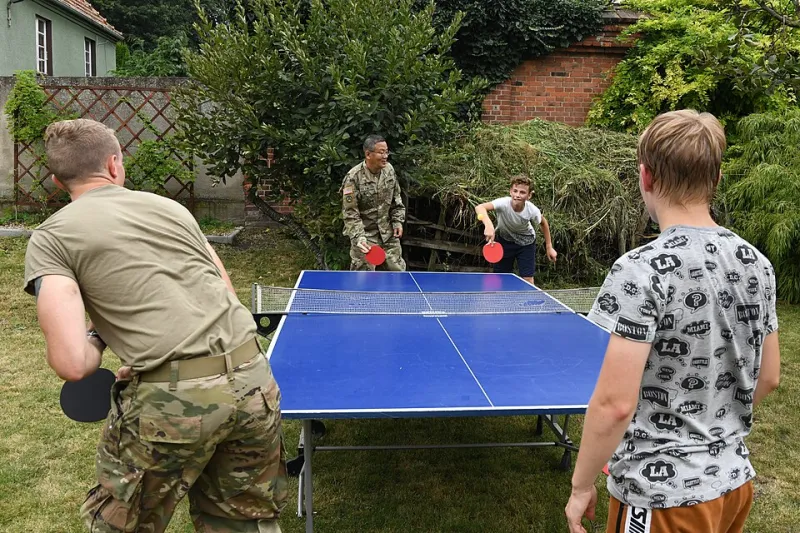
Photo: U.S. Army 297RSG by Sgt. Heidi Kroll, Public domain, via Wikimedia Commons
There's a moment most of us know well. The workday has been relentless, the group chat is blowing up, and the commute home felt like a contact sport. You drop onto the couch, open a game on your phone or browser, and within ten minutes — something shifts. Your shoulders drop. Your breathing slows. The mental noise fades a little.
That's not an accident. And it's not weakness. It's neuroscience.
What's Actually Happening in Your Head
When you sit down with a casual game — something low-stakes, easy to pick up, without a punishing learning curve — your brain begins a measurable process of decompression. Research published in journals like Cyberpsychology, Behavior, and Social Networking has shown that short sessions of casual gaming can meaningfully reduce cortisol, the hormone most closely associated with stress responses.
Cortisol is useful in small doses. It's what gets you moving in a crisis. But sustained high cortisol — the kind that comes from modern work culture, financial pressure, and the relentless scroll of bad news — takes a real toll on sleep, mood, immune function, and cardiovascular health.
Enter the humble casual game.
Dr. Sarah Gillespie, a Melbourne-based psychologist who works with clients experiencing burnout, describes the effect as "structured distraction with a reward loop." Unlike doom-scrolling social media, which tends to amplify anxiety, casual gaming gives your brain a contained problem to solve — one with immediate feedback and a clear endpoint.
"The brain responds really well to achievable goals," she explains. "When you complete a level, match a pattern, or solve a small puzzle, you get a small dopamine release. That's your nervous system getting a breather. Over time, those moments of relief genuinely add up."
The Myth That Gaming Makes Anxiety Worse
One of the most persistent misconceptions about gaming is that it increases anxiety or acts as avoidance behaviour. And look — context matters. Competitive, high-stakes gaming with social pressure and performance metrics is a different beast entirely. But casual gaming? The research tells a different story.
A 2023 study out of the University of Queensland examined the gaming habits of adults aged 18–45 and found that participants who engaged in casual gaming sessions of 20–40 minutes reported significantly lower perceived stress scores compared to those who chose passive screen time like TV streaming or social media browsing. The key differentiator was agency — the sense that you're actively doing something, making choices, influencing outcomes.
That sense of agency is particularly valuable for Australians navigating cost-of-living pressures, long working hours, and — let's be honest — the lingering psychological hangover from recent years of disruption. When so much feels out of your control, a game that responds to your input and rewards your effort can be quietly restorative.
Not All Games Are Created Equal for Stress Relief
Here's where it gets interesting for players who want to be intentional about how they game. Not every title delivers the same calming effect. Game designer Marcus Tran, who's worked on several browser-based casual titles aimed at the Australian market, says the design philosophy matters enormously.
"We think a lot about what we call 'friction,'" he says. "High friction — difficult controls, punishing failure states, aggressive monetisation prompts — spikes stress rather than reducing it. Low-friction design means you can jump in without a tutorial, fail without consequence, and leave whenever you want. That's the sweet spot for genuine relaxation."
According to Tran, the most effective stress-relief games tend to share a few traits: gentle audio design, satisfying but not overstimulating visual feedback, and progression systems that feel rewarding without being addictive or manipulative.
Think match-three puzzles, idle games, word games, light strategy titles, and casual multiplayer experiences where the vibe is playful rather than competitive.
Practical Tips for Gaming Your Way to a Calmer Headspace
If you want to make casual gaming a genuine part of your mental health toolkit — rather than just a guilty pleasure — here are a few approaches worth considering:
Set a soft time boundary, not a hard one. Telling yourself you'll play for exactly 20 minutes often creates more stress than it relieves. Instead, aim for a natural stopping point — the end of a level, the completion of a daily challenge. This keeps the experience feeling like a reward, not a task.
Choose your game to match your mood. Feeling overstimulated? Lean into slow-paced puzzle games or idle titles. Feeling flat or low-energy? Something with a bit more interactivity and social connection might lift your mood more effectively.
Separate gaming from screens you associate with work. If you spend eight hours a day on a laptop for work, gaming on that same device can blur the psychological boundary between effort and rest. A phone, tablet, or browser on a different device can help your brain categorise the activity as downtime.
Don't game as a substitute for sleep. This one's important. Playing right up until you close your eyes can interfere with sleep quality, particularly with brighter, more stimulating titles. Give yourself a 20–30 minute wind-down buffer.
Play multiplayer games with people you actually like. The social dimension of gaming is genuinely beneficial — shared laughter, light competition, and connection with friends or family amplifies the mood benefits considerably.
The Bigger Picture for Australian Players
Australia has one of the highest rates of gaming engagement in the Asia-Pacific region, with millions of players across every age bracket logging on regularly. Yet gaming is still sometimes framed as a frivolous or even problematic activity in public conversation — particularly for adults.
The evidence increasingly suggests that framing is outdated. When approached thoughtfully, casual gaming is a legitimate, accessible, and genuinely effective tool for managing the everyday stress that most of us carry around like a backpack we forgot we were wearing.
At 9Game Online, we've always believed that games should work for you — not the other way around. Whether you've got five minutes between meetings or a slow Sunday afternoon, the right game at the right moment isn't escapism. It's self-care with better graphics.
So next time someone raises an eyebrow at you for squeezing in a quick game, you can tell them your cortisol levels are doing just fine, thanks.